Field Service Dispatch System
Field Service Dispatch System is a MAVLINX vertical operating system for maintenance companies, repair teams, installation providers, inspection businesses, and field-service operators that need control over service requests, customer/job intake, technician assignment, dispatch scheduling, route planning, job status, parts requests, field notes, billing, follow-ups, issue escalation, and dashboards.
This is not a generic repair-company advertisement, fleet-tracking promise, emergency-response guarantee, or technician stock-photo page. MAVLINX installs the field-service dispatch control layer that helps owners see what request came in, who is assigned, what job is delayed, what part is pending, what customer confirmed, and where field operations stand.
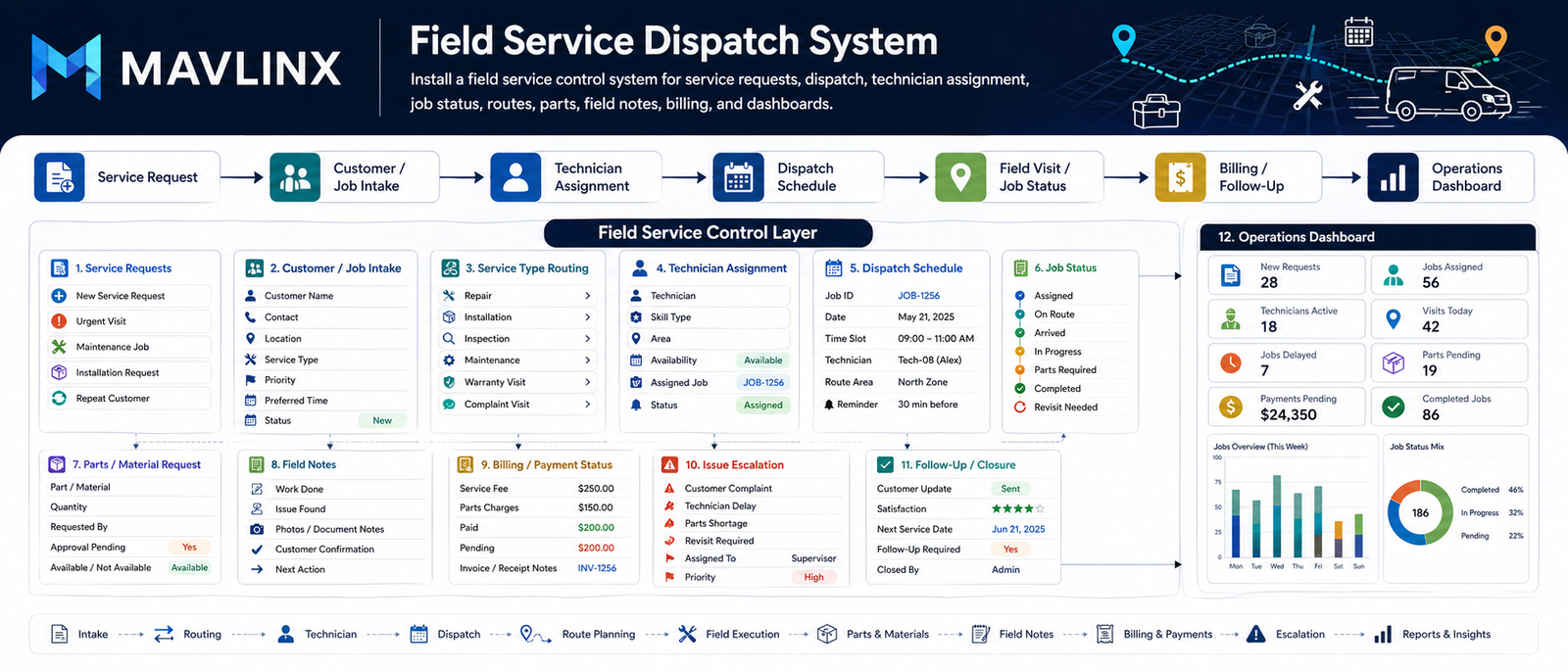
Field service businesses usually do not lose control because technicians are inactive. They lose control because service requests, customer details, locations, technician availability, dispatch timing, job status, parts requirements, billing, customer confirmation, and revisit notes are scattered across calls, WhatsApp, paper slips, spreadsheets, and staff memory.
Field-service leakage is usually job-traceability failure.
A customer requests a visit. A technician is assigned verbally. A part is unavailable. A job is marked complete without confirmation. A payment is pending. A revisit is required. If there is no operating layer, the field team stays busy but management cannot see the full job truth.
The non-obvious failure
Many field-service companies think the answer is only more technicians, more calls, or faster vehicles. Often, the first operating gap is that the service journey is not traceable from request to dispatch, visit, field note, billing, follow-up, and dashboard.
MAVLINX installs the control layer before the business scales more technicians, locations, service lines, warranties, repeat visits, or urgent-response volume.
MAVLINX installs a field service dispatch control system around your actual operating flow: service request capture, customer/job intake, service type routing, technician assignment, dispatch scheduling, route planning, job status tracking, parts/material requests, field notes, customer confirmation, billing status, follow-ups, issue escalation, and operations dashboard reporting.
Service Request & Job Intake
Capture new service request, urgent visit, maintenance job, installation request, repeat customer, location, service type, priority, preferred time, and status.
Service Type Routing
Route repair, installation, inspection, maintenance, warranty visit, complaint visit, or revisit work into the correct technician or team path.
Technician Assignment
Track technician, skill type, service area, availability, assigned job, workload, field status, and next assignment readiness.
Dispatch Schedule & Job Status
Control job ID, date, time slot, technician, route area, reminder, assigned, on route, arrived, in progress, completed, or revisit-needed states.
Parts, Field Notes & Billing
Track parts/materials, availability, work done, issue found, photo/document notes, customer confirmation, service fee, parts charges, invoice, receipt, and pending payment.
Operations Dashboard
Show new requests, assigned jobs, active technicians, visits today, delayed jobs, parts pending, payments pending, completed jobs, and escalated issues.
The system is built to connect customer-facing service activity to practical dispatch visibility for owners, dispatchers, technicians, supervisors, and finance teams.
New request, urgent visit, maintenance job, installation request, or repeat-customer request enters intake.
Customer, contact, location, service type, priority, preferred time, and request status are captured.
Technician, skill type, area, availability, route, assigned job, and status are selected.
Job ID, date, time slot, technician, route area, and reminder are controlled.
Assigned, on route, arrived, in progress, parts required, completed, or revisit needed is tracked.
Service fee, parts charges, paid/pending state, customer confirmation, complaint, and follow-up are updated.
Owner sees requests, assigned jobs, active technicians, delays, parts, payments, completed jobs, and issues.
Field-service dispatch systems are custom vertical operational systems because every maintenance company, repair team, installer, inspection provider, and service business has different service categories, dispatch logic, technician availability rules, parts handling, billing flow, revisit process, and reporting needs.
Service Dispatch & Job Tracking System
Best for field-service operators that need structured service request intake, technician assignment, dispatch scheduling, route planning, job status, parts requests, field notes, billing status, customer confirmation, and operations dashboards.
Typical included system components
- Service request and customer/job intake fields for contact, location, service type, priority, preferred time, and status
- Service type routing for repair, installation, inspection, maintenance, warranty visit, complaint visit, and revisit work
- Technician assignment fields for technician, skill type, service area, availability, assigned job, and current status
- Dispatch schedule fields for job ID, date, time slot, technician, route area, reminder, and dispatcher notes
- Job status board for assigned, on route, arrived, in progress, parts required, completed, and revisit needed
- Parts/material request tracking for item, quantity, requested by, approval pending, available, not available, and shortage notes
- Field notes and customer confirmation fields for work done, issue found, photos/document notes, next action, customer confirmation, and complaint state
- Billing and dashboard surfaces for service fee, parts charges, invoice/receipt notes, paid/pending status, active technicians, delayed jobs, parts pending, payments pending, and completed jobs
Domain, hosting, paid tools, premium APIs, WhatsApp API, SMS, GPS/fleet tracking tools, route optimization tools, payment gateways, accounting tools, inventory platforms, technician mobile apps, emergency-response infrastructure, legal compliance, insurance handling, and external integrations are excluded unless included in a signed proposal.
Use the route that matches your current buyer state. This page is for vertical system fit, not generic repair advertising, emergency-response guarantees, or fleet automation overclaiming.
I need a field-service dispatch system.
Use this when you want MAVLINX to understand your service workflow and propose a practical installed dispatch control system.
- Service request flow
- Technician assignment logic
- Dashboard requirement
I want to understand custom system logic first.
Use this route if you need to understand MAVLINX custom vertical systems before submitting a project request.
- Vertical workflow logic
- Custom implementation path
- Operational architecture
I am unsure whether I need CRM, fleet tracking, or dispatch control.
Use this when the problem is visible but the correct system path is not yet clear.
- Diagnosis first
- Correct routing
- Package-fit clarity
These answers prevent confusion between a dispatch control system, fleet tracking tool, repair company advertisement, technician app, and emergency-response guarantee.
Is this fleet tracking software?+
Is this a repair-company website?+
Can it track technician assignment and job status?+
Can it support parts requests, field notes, and billing?+
Does MAVLINX guarantee repair outcomes or emergency response times?+
Stop managing field jobs from scattered calls, WhatsApp messages, slips, and memory.
Install a field service dispatch system that connects service requests, customer intake, technician assignment, dispatch scheduling, route planning, job status, parts, field notes, billing, follow-ups, escalations, and operations dashboard visibility.